Javier Correa, Jr.: Serving Up Delicious Food and Community Service
When Arturo and Maria Correa opened their restaurant, Sombrero Taco Shop, in the 1960s, they may not have realized that they were launching a family business that would span decades and generations – especially after closing their shop in 1980. But in 1984, their son, Javier Sr., reopened the restaurant with an ambitious vision and business-forward approach. He steadily built a fast-food cornerstone in the San Diego region and beyond, while mentoring his son Javier Jr., who now serves as the CEO of Sombrero Mexican Food.
Javier Jr. has introduced a number of systems that have helped the business evolve and keep up with the times. The chain, now some 15 restaurants strong, is a San Diego staple, even famously receiving a shoutout from Blink-182 in their song “Josie.” Javier Jr. also drives the company’s mission to give back to their community, by frequently collaborating with community partners to support charitable causes. One example was the “Make a Muscle, Make a Difference” campaign, in which Sombrero partnered with the Muscular Dystrophy Association to send children with muscular dystrophy to summer camp. Sombrero is now three generations in, with no signs of slowing down – either serving food or serving their community.
Jonas Oppenheim: There’s something so basic and nurturing about feeding people. What’s the intersection between making food and community service?
Javier Correa, Jr.: So when you think of our locations, they’re kind of in specific neighborhoods; they’re very neighborhood focused. I think it starts there, in the culture within our footprint. When you’re in the neighborhood, then you get a feel for that community, and you start forming relationships in the community, then people start reaching out, it’s very organic. So I think it started with being good neighbors, and then it kind of blossomed from there.
JO: How does philanthropy fit into your family’s mission?
JC: First and foremost are our employees. We always start there. There are a lot of little things we do internally: recognition, taking care of our team, competitive wages. We always try to take care of everybody in-house, in a family style that’s very organic. A lot of times it’s little things, like our admin team supporting a team member at our office with online paperwork or navigating a need for their family. We connect them with the right resources. So we start from a familial standpoint.
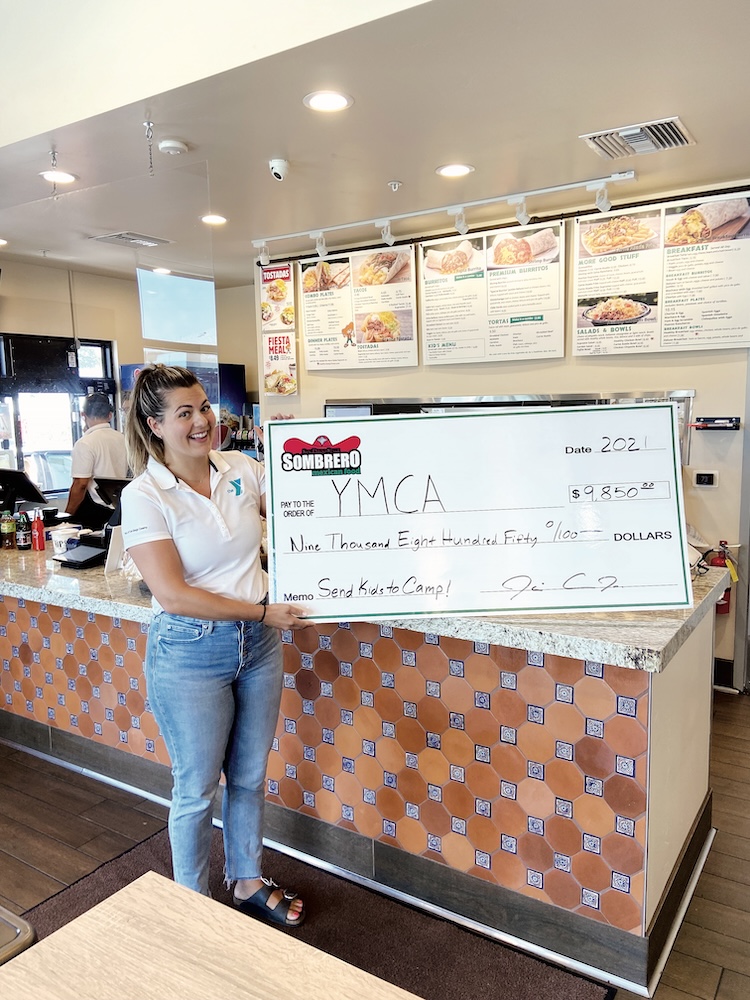
As far as philanthropy, it comes down to, how do we find funds to support causes that we care about? We do an annual sending-kids-to-camp campaign fundraiser across all of our locations. We just wrapped up our ninth year of doing that. That’s something that we approached the YMCA with and said, hey, we want to do this system-wide fundraiser. Is there something you could partner with us on? Our goal was to impact more people across San Diego and the surrounding areas. At the center of that is my belief that I’ve been very blessed to be able to work closely with my dad in business, and with a lot of people that I’ve connected with and have been supported by. So if we can make one positive connection like that for these kids, that could change someone’s life. The YMCA was the best partner for that project. It was cool how it all worked out. Then I dug in a little more and was like, oh my gosh, they do so much at the Y! They impact everyone from newborns to seniors. That’s where the alignment came in; they’re consistently making the right impact. That’s ultimately what we were trying to do.
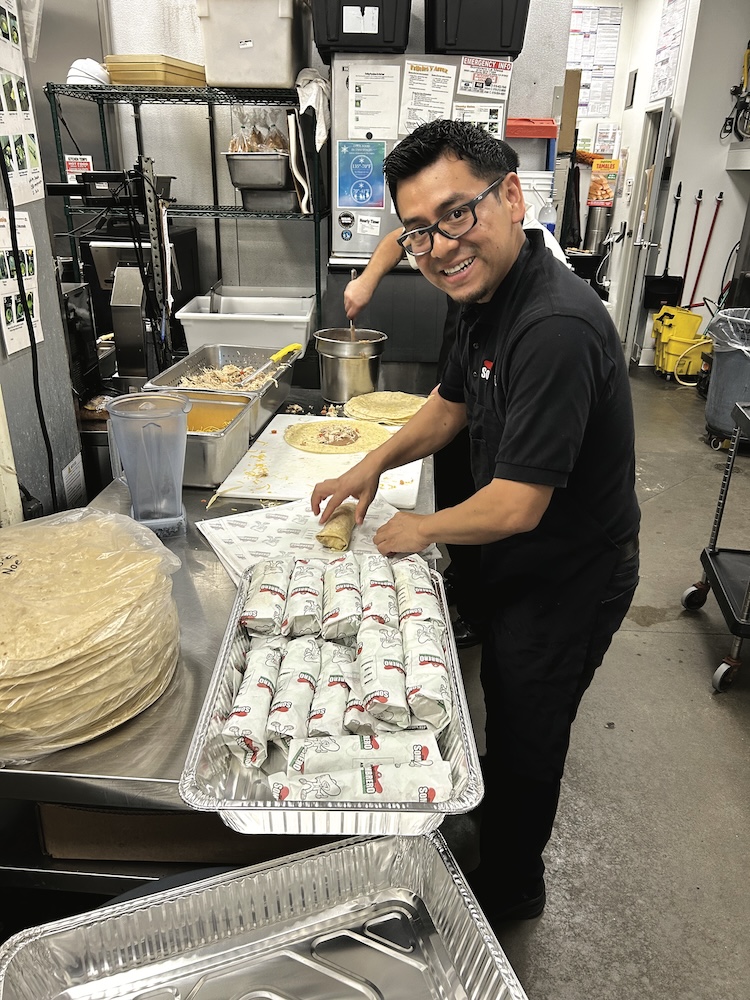
Before that, we had been involved with other organizations, like the Muscular Dystrophy Association. Over the years, we’ve done so many kinds of informal things. A lot of times it’s just donating food. There’s a thing we do, I call it our burrito ministry. We give away roughly 15,000 burritos a year that we 100% donate. We donate to different nonprofits, homeless outreach, all various ministries. We work with a couple of groups that, a few times a week, they go out and do homeless ministry. Ultimately we are partnering to supplement the great work that they’re doing. You’d be surprised that a burrito could enhance the work, but it’s as simple as that. If we’re not doing it directly, if we can just enhance a community effort, we’re all about that, for sure.
JO: In 2018 you became a board member with the San Diego YMCA. What was it like getting involved with philanthropy at that level?
JC: Joining the board for the YMCA was a big step for me, kind of stepping outside our four walls at Sombrero and really learning, from a strategic standpoint, how that actually looks. After we had partnered on that fundraiser, and it was successful, the leadership at the Y said, hey that was great, do you want to be on our corporate board? I had never done anything like that, so I joined. I come from a small family business, so just seeing the bigger structure – I’ve been learning a lot. Obviously, the YMCA is a large employer in San Diego. But you also see the similarities between smaller businesses or organizations. It’s universal in a lot of ways. I’m pretty proud of our board. I feel like we’re really diverse, and they’re open to all the ideas and communication. The YMCA really embraces the value of the board, bringing in outside feedback and perspectives. It’s been a great experience both ways – I’ve learned a lot but they’ve also listened. I’ve provided a lot of insight while serving as co-chair of the annual campaign for numerous years. It’s been a lot of learning and a little bit of give and take. It’s been fun, definitely.
JO: You’ve also partnered with the San Diego Food Bank. How did that come about?
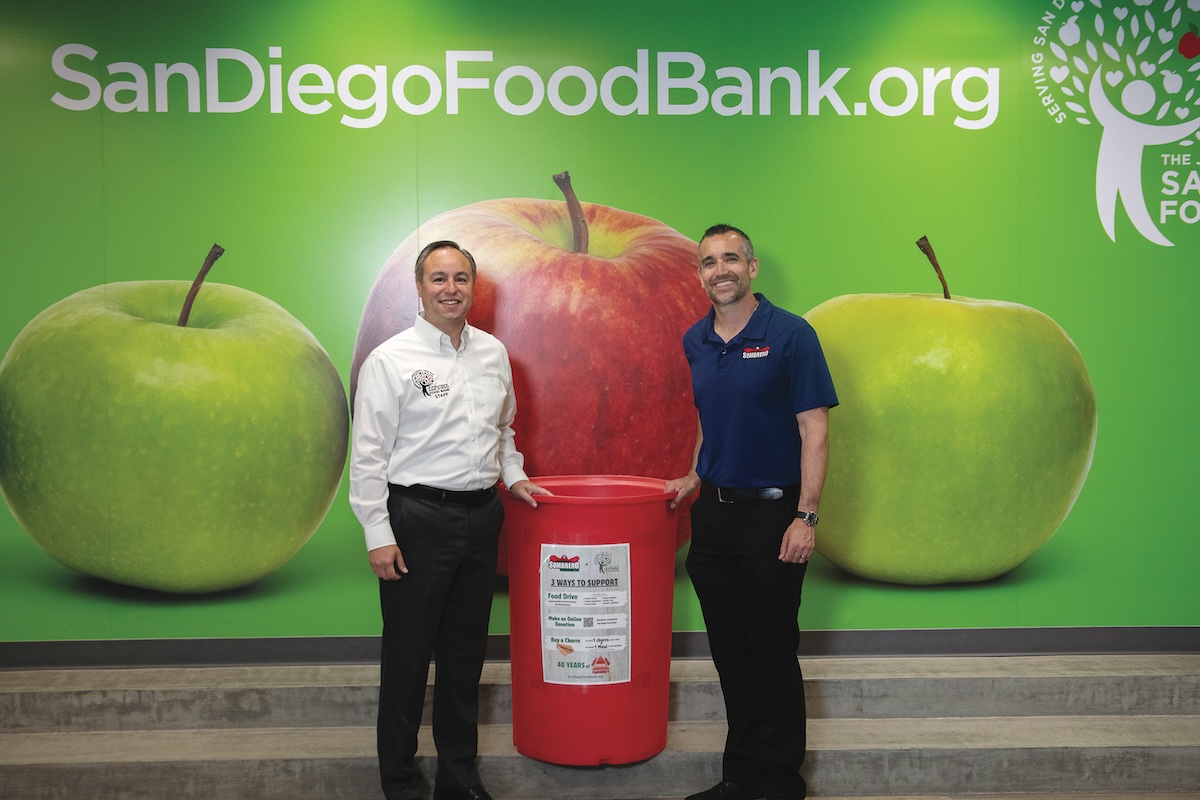
JC: We wanted to celebrate our 40th anniversary as a company, and also do something that’s going to come back and impact the community. I always see the San Diego Food Bank doing great things in our community. I reached out to them and we did a food drive, too. Of course some of the board members I know at the Y serve on the Food Bank board, too. A lot of these nonprofits collaborate quite a bit. It’s cool to see the crossover, whether it be on the volunteers or the leadership.
JO: What are other campaigns that have made you proud?
JC: One thing that we do every October is the Baja Challenge, through a group called Project Mercy. My brother’s father-in-law had been doing it for years, with a bunch of people in the construction industry. They go down to Baja and they build houses in a day. About 20 houses in that one day. So I linked up with them and we ended up sponsoring our own house. Now I put together a team of family members and some of my buddies who are in the construction space, and we go down to do our own house. We build a 16-by-20 house in one day, down in Baja, anywhere from Tecate to Tijuana. You go there and it’s a slab, and it’s about 15 of us, and we frame up this house, paint it, give them some bare essentials, providing the recipients shelter and security, because they’ve been living on dirt before, in makeshift houses made from anything they can put together. We have been part of this effort for eight years now.
JO:It’s amazing to have a successful family business. What does family mean to you and how you approach this work?
JC: Obviously family legacy means a lot to us because we’ve poured our heart and soul into it. My grandparents immigrated here from Mexico. My father was about three years old. It’s interesting because from my grandparents to my dad, there was definitely a kind of a professional shift. My grandparents only hired family. Whereas my dad started building more of a brand, really taking a hard line on high standards, high quality. He hired really good employees, who became almost family. As our founder, he taught us that if we don’t take care of the business, it’s not gonna protect the family, and all the families we support. That’s something that’s been ingrained in me. Then I brought in many new systems, building standard recipes and really systematizing everything, which has helped us continue to this day. You know, 42 years in the restaurant business… it’s a tough industry.
I remember, for example, that at a lot of mom-and-pops, you saw the kids running around or whatever. But with us, when I was little, if you weren’t in uniform you did not go behind the counter. So it was really taking that hard line of okay, this is a family business but it’s a business. I’m really proud that my dad did that. And to this day, we put the business and the brand first, so I have to hold myself to a higher standard. Just because it’s a family business doesn’t mean we can cut corners. That shift really came from my dad, and I think that’s really helped us be sustainable for so long.
JO: Your restaurants serve Mexican food, there’s Mexican imagery and culture represented in the restaurants. What role does your cultural heritage play for you?
JC: It’s funny because the traditional taco shop started in San Diego. Roberto – he was one of the first innovators, Roberto’s Taco Shop. My dad knew him personally. In San Diego, we’re close to the border, so you have that Baja California influence, very traditional. When you go into a taco shop, there’s a cultural element to it. But there’s also this California element to it. We have enchiladas, chile verde, chile rellenos… and then we put French fries in a burrito. And that’s our top seller! So it’s this unique blend being a border town, between the style, even the employees, even the dialogue. My dad was born in Tijuana, then he came to San Diego. We’re definitely a bi-national community in San Diego and it very much comes through in our style.
JO: Where do you find the happiness in this work?
JC: I feel that to be happy, you have to have gratitude. But to have gratitude, you have to pause and actually reflect on the good things that you’re doing. One of my roles is constantly reminding the team of the mission, and that we’re moving forward, and celebrating wins. The restaurant business is a 24-hour living breathing thing. So you’ve got to take the time to measure results, quantify them, and celebrate with the team and family. That makes me happy.