Pam Connors: From Slinging Arrows to Lifting Communities
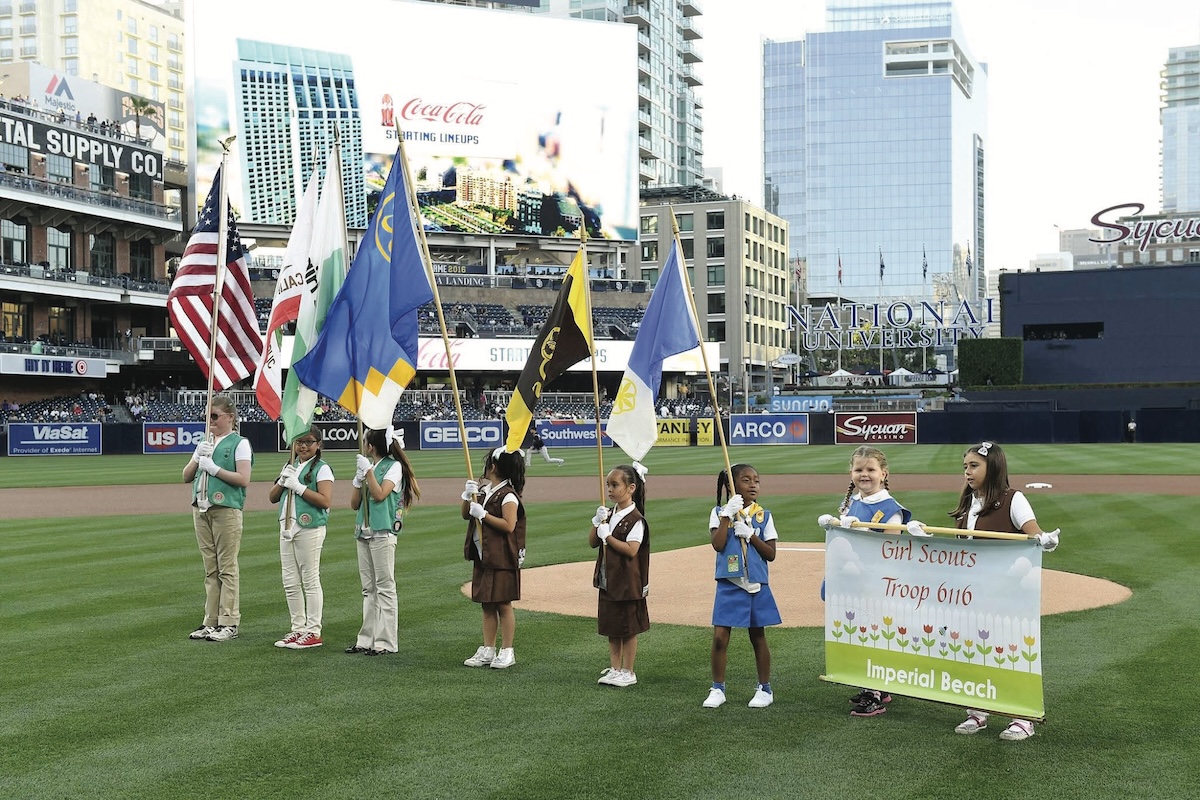
Pam Connors is a San Diego native who joined Girl Scouts of America (GSA) at age four, and has been devoted to the organization ever since, representing the San Diego chapter on regional and national delegations (she wants you to know it’s not all about the cookies!). A lifetime of service may have always been in the cards, considering that her mother is a retired school librarian who is now a force in PTAs across the South Bay; while Pam’s father spends 50 weekends a year feeding unhoused people with the Hunger Project. Connors has followed in their footsteps. She has served in a dizzying amount of leadership roles in GSA, from leading troops and training future troop leaders, to managing camping expeditions and community service projects. For all that and more, she received a “Thanks Badge,” one of the Girl Scouts’ highest honors. Connors now balances her career, process-engineering for a telematics company, with spending every remaining ounce of time and energy on GSA and other philanthropic causes. But only the Girl Scouts has allowed her to train children in the arts of archery, hatchet-throwing, and slingshot.
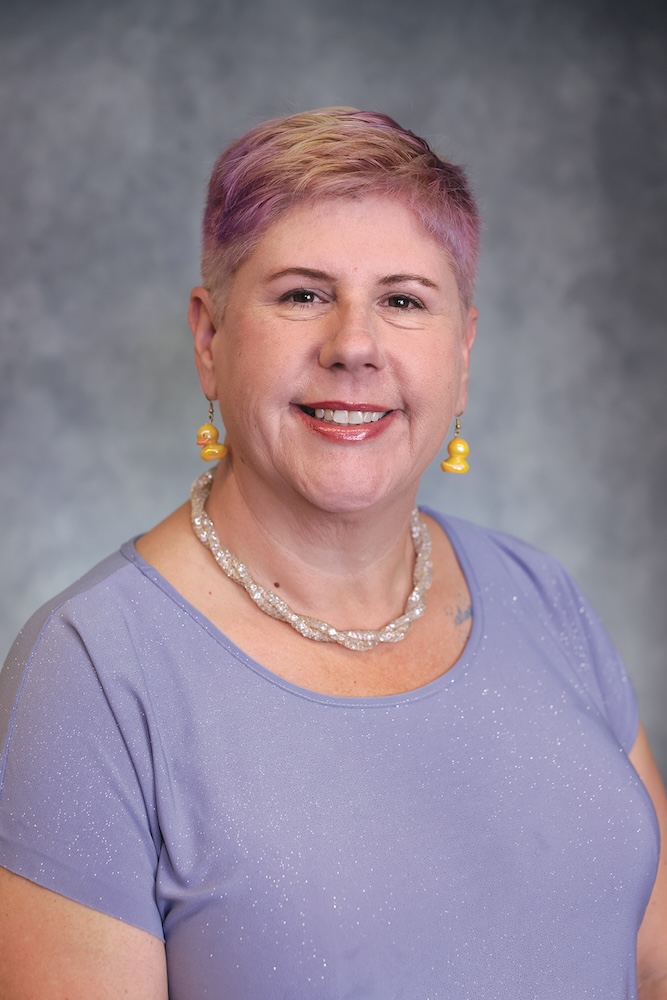
Jonas Oppenheim: I have to ask – did you develop your hatchetry and slingshot and archery skills within the context of the Girl Scouts? Or did you already have them?
Pam Connors: I didn’t do any of those pre-Girl Scouts. But when my oldest kid was in fourth grade, they were old enough to do archery, but they were very visually impaired. And I found that a lot of the archery instructors were intimidated by that, and afraid to help them actually fire a weapon at the range. So I got myself certified as an archery instructor. So that began my archery career. I take a lot of pride in helping girls who are differently-abled to shoot archery. I’ve had a lot of visually-impaired girls. I’ve had girls that are physically impaired one way or another. I’ve had girls out there with casts on. I’ve had girls out there in wheelchairs. I had a girl who was on the spectrum, and everyone around her, including her parents, was afraid that she shouldn’t be doing archery. I helped her to do it, and she felt so successful that her nonverbal brother actually wanted to try, and then once her brother did it, even her dad was like, okay I think I want to try. That was really fun. It’s a sport that can be adapted for everybody.
JO: What do you do with the Hunger Project, and what does it mean to you?
PC: The Hunger Project is a service project of the Temple Beth Israel in La Jolla. We serve at Paul Mirabile kitchen at Father Joe’s Villages, which is a whole network in downtown San Diego. They support unhoused people in various stages of need. It’s a huge part of San Diego unhoused support. I started volunteering there because my dad has been volunteering there for some 30-odd years. He started when he was in the Navy. He was responsible for bringing sailors down to volunteer on Sundays. When he retired, he decided to stay on volunteering. He’s the main volunteer in charge there, he coordinates all the other volunteers. And so, what better way to spend a day with your dad than to go down and volunteer, right? I help coordinate the donation center, a little shopping store for folks. Every week we get donations from all over the place. People drop off bags, and I help organize everything with other volunteers. There’s some folks that I get to know and I know their tastes or I know their size or what they’re looking for. There’s some folks that just tell me their story and I learn what they’re currently working towards. It’s nice to find new things for people that need it and appreciate it.
JO: You’ve touched on family. For you, what is the alignment of family and philanthropy?
PC: My dad’s given 100% to the Hunger Project for so many years, and it’s really neat to see him completely selflessly do these things regardless of how he’s feeling or if he’s injured or anything else. And my mom was a Girl Scout leader when I was growing up. She retired, gosh, maybe 20 years ago from the school district where she’s always been super involved. She was a librarian and she used to spend her weekends going down to free book giveaways to collect books for the libraries because they didn’t have enough resources to have good books on the shelves. Now she spends almost all her free time either running book fairs or running PTA meetings or helping with elections or helping with fundraisers. And it has continued with my child, who started co-leading the troop when they were a senior in high school. They’re also on volunteer boards at school for a couple of different clubs. So, you know, it just continues to spread in my own family… although I think all of us have a little bit of a problem saying “no.”
JO: Can you talk about your experience working with the Ronald McDonald House?
PC: My company, Lytx, does volunteer activities throughout the year. They coordinated an event to serve in the kitchen at the Ronald McDonald House in San Diego, which was a really neat experience for me. We got to tour the facilities and serve the families. But it was a full-circle moment for me because both my children were born premature, but my 16-year-old was born premature enough that we had to stay at the Ronald McDonald House for about six weeks while she learned to breathe on her own. That was up in Sacramento. It was nice to be able to then give back to the Ronald McDonald House so many years later.
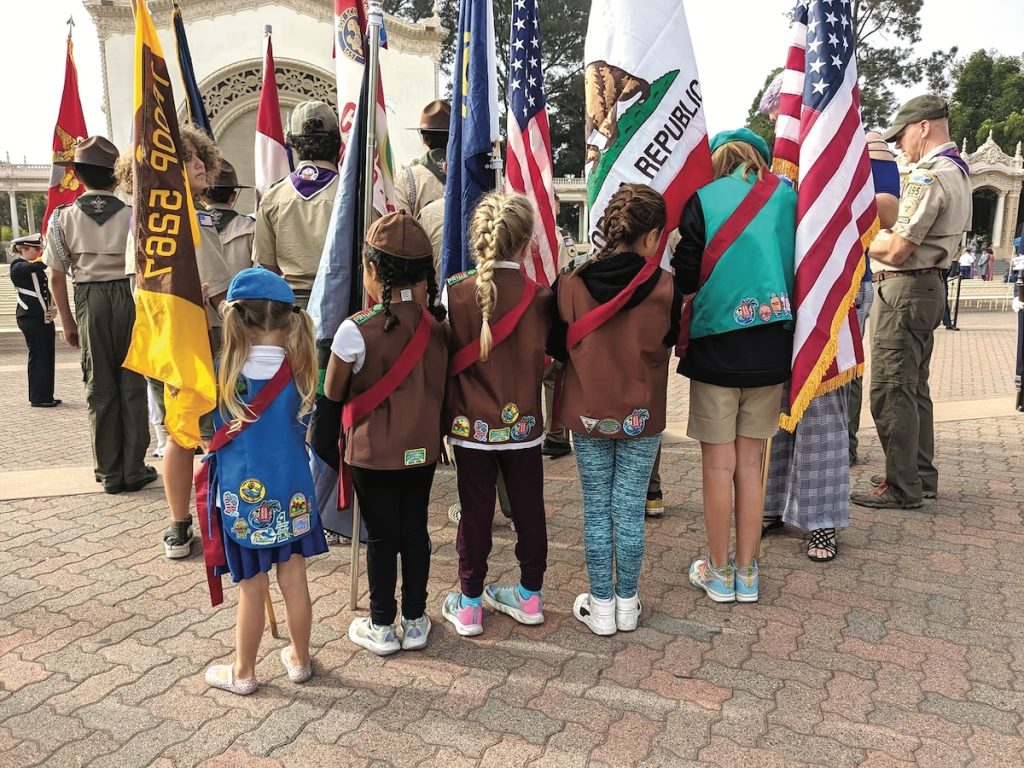
JO: Being a Girl Scout involves a lot of community service. How do you get the girls to buy into the concept of service?
PC: I don’t feel like it’s ever been a challenge to get girls to do service, because it’s baked into something they don’t like. I have two girls right now in the troop that I’m co-leading. They are so about beach clean-up – that’s literally the reason they joined Girl Scouts. They want to do beach clean-up because they love the beach and they don’t like how dirty it is. So it’s a matter of teaching them that you can do something about it. When they complain, hey, this intersection is really awful – great. Let’s talk about how we can put in a light, crosswalks, that kind of thing. Or, someone went to the animal shelter and they don’t have enough blankets. Cool. Let’s make some blankets. So it’s just always asking them, okay, how do we fix this?
JO: What is special or necessary about creating a safe space for girls specifically right now?
PC: There are different ways that girls learn and move through the world that aren’t accommodated in a co-ed space. And depending on the age level of the girl, that will change dramatically, right? If I had a six-year-old boy and a six-year-old girl side by side, they’re not going to learn the same way or have the same level of behavioral needs, right? And as the girls get older, and there’s differences between girls and boys, and they are focused more on that, having an area where that’s not the focus is great. Then being able to adapt for the different ways that learning happens and brains happen is critical as well. There are also things that girls and women, unfortunately, need to do to be safe in the world that are not things that you need to prep boys for. And having a strong sisterhood or base of friends that you can talk to. The way that women move through the world is very different from the way men move through the world. So having a separate space for that is really, really critical.
JO: What is the role of donors in terms of GSA?
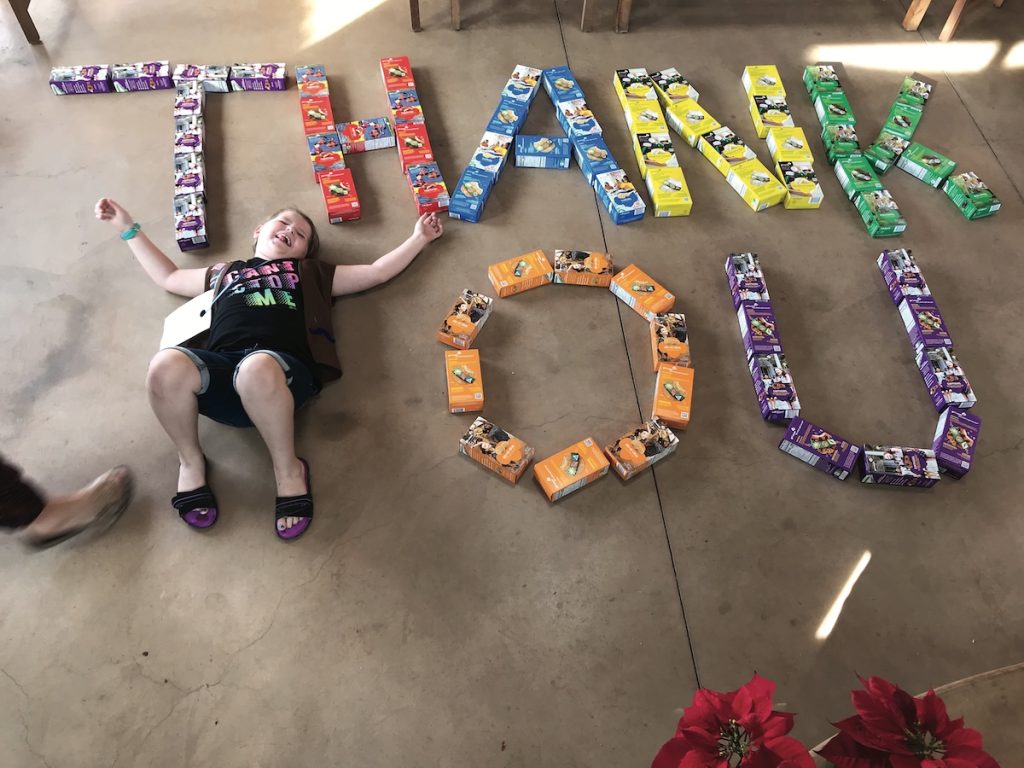
PC: I’d say my really biggest thing for donors is wanting them to understand that it’s not just the cookies. The cookies are great. The cookies give girls incredible experiences. We have girls who start off not speaking and hiding behind mom when they’re supposed to be selling cookies, and those same girls become the girls that are doing business propositions and making corporate asks and things like that. It’s a great progression to see. And we rely on donors to be able to give the girls experiences that maybe the donors never had. Maybe there’s a donor out there that’s like, “Man, you know what? I always wish I could have gotten into canoeing.” And they could be sponsoring a canoeing project or some supplies. There’s no restriction on what the funds can do. So if you’re passionate about something and you’re like, “Hey, I want to sponsor a backwards horseback riding program,” or I don’t know, underwater basket weaving, those are things that the Girl Scouts will do and take advantage of, to learn and become confident and do things that they’re not going to do elsewhere.
JO: What feelings do you get from having service be such a large part of your life?
PC: I don’t think I could get through corporate life if I didn’t have philanthropy. I work for a great company that does great things, but direct service to others “fills my bucket.” Being able to see the direct impact on girls, on adults that want to lead girls, and then that lasting impact… Like, I go to some of my local businesses and I walk in and I hear, “Hi, Miss Pam!” And it’s really fun to see kids that I knew when they were very small now working in the various industries around us and making a difference. And just being able to see how that affects their whole lives and what that means. It’s really rewarding and it’s why I get up in the morning. It’s life’s purpose for me.