Father Brian Kelly: Wearing Out the Soles of His Shoes
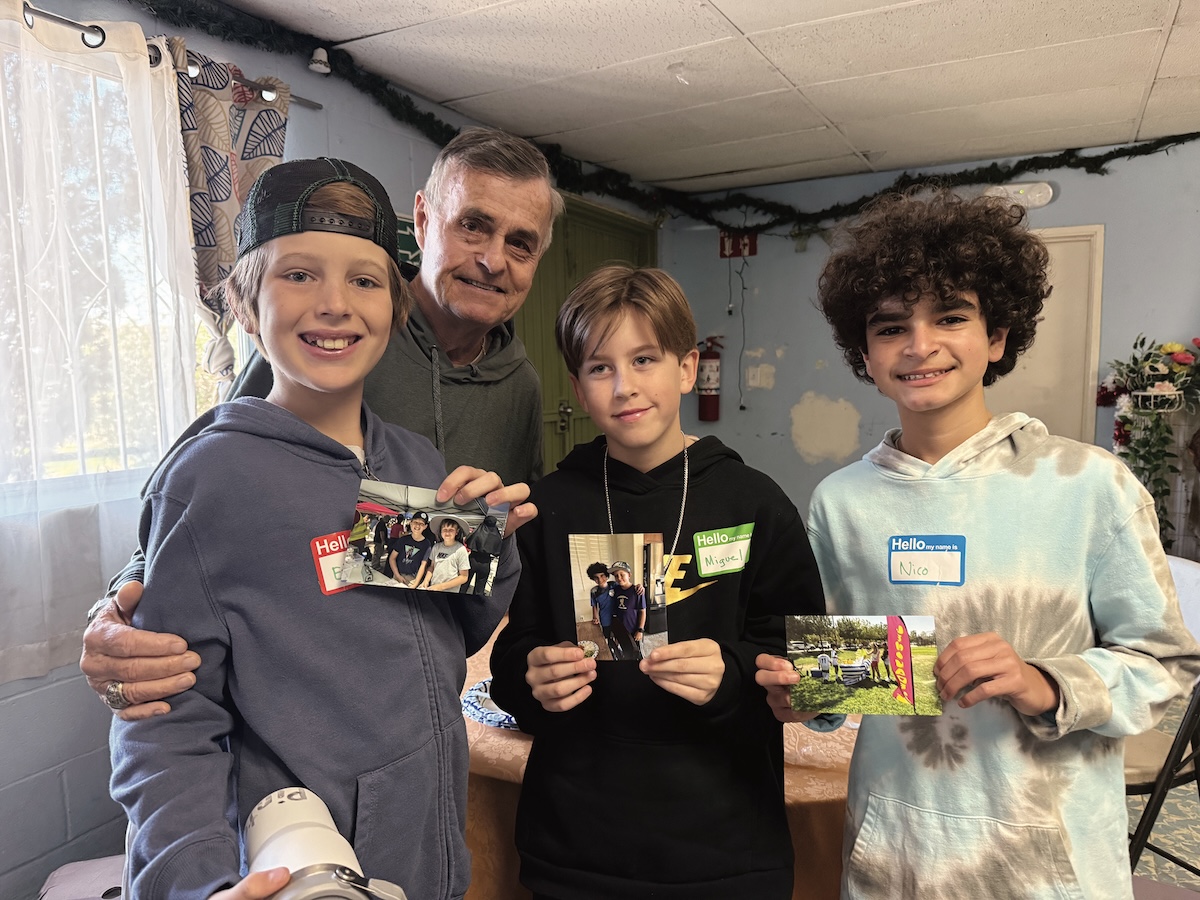
Sometimes the call comes early. Father Brian F. Kelly was a child in Catholic school when he fell in love with the mystery of the Mass (Eucharist), setting him on the path towards priesthood. He earned a master’s in Pastoral Theology, and was ordained in 1977. While doing his parish work at a cancer-treatment hospital, he received a letter from a priest who was a Navy chaplain recruiter. At that time, the military was suffering a priest shortage. Having grown up on a river back in his home state of Pennsylvania, along with family who had served, the Navy chaplain fit seemed right.
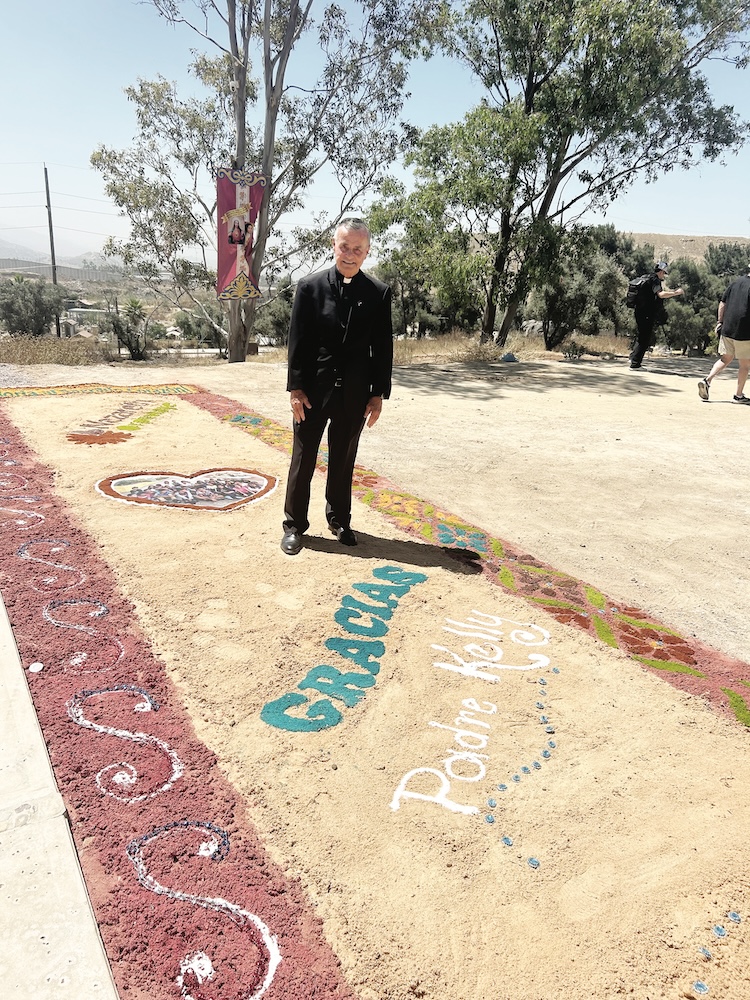
Throughout his decades-long career as a military chaplain, Kelly sought to make a positive impact in every port-of-call, developing a mission of hands-on philanthropy. This approach culminated in his relationship with Nazareth Orphanage, in the Mexican city of Tecate. Before founding the nonprofit Outreach for Nazareth Orphanage (OFNO), which would finance several breathtaking new buildings at the Rancho, Kelly led missions to Nazareth Orphanage. He started by bringing sailors and Marines willing to donate their time and labor to fixing up the grounds; then their families joined in; then American volunteers of every stripe. Now, for some 30 years, he continues to lead four trips a year, while serving as the face and driving force of OFNO’s fundraising efforts.
Jonas Oppenheim: What is the throughline that connects your life as a priest and running a nonprofit and your experiences as the chaplain?
Father Brian Kelly: There’s a common thread that motivated me and guided me in my life, which is trying to be faithful to the Gospel of Matthew 25, where Jesus says; “As long as you did it for one of these, the least of my brothers, you did it for me.” So I’ve always been motivated by service for others, being able to help assist them. I’ll never forget my social justice professor at Saint John’s Seminary in Boston, Massachusetts, who said, “You need to wear out the soles of your shoes, not the tires on the car.” What that professor was saying is, “If you want to know your people, you have to walk with them. You have to slow down and see the nuances of where they’re at and things of that particular nature.” Pope Francis’ analogy was just as similar – he says, “You need to smell like your sheep.” Which means, get in there, live with them, understand who they are and the circumstances of their lives. I was always motivated by wanting to help others. Coming from a family of nine, we didn’t have a lot of material things. My parents worked hard. They both had college degrees, but we were all taught to work hard and not to just assume everything will be handed to us.
JO: Did you have any formative first experiences with the wearing out of your soles, that suggested to you that you were on the right path?
FBK: Back in Williamsport, Pennsylvania, as just an assistant pastor at a parish church, I was with two other priests who truly modeled for me what a good priest is. By literally walking that city, instead of driving to the hospital [to minister], which was about 12 blocks from the church, just how many people do you think I could encounter? We walked through the African American community and you would see that the housing conditions were so different than ours. And you wonder, why is that? And why don’t we have more people of color in our church on Sunday? And just by talking to people, and the more you walk through the neighborhoods, they see you wearing your black suit with a white collar and they know who you are. People appreciated that I met them where they were at in their life cycle.
JO: What role do you think money and philanthropy play in making a positive impact?
FBK: I think deep in the core of humanity is the desire to reach out and assist others. I look at so many poor families that still know how to break bread and share what little they have. They invite you into their homes. I am an extra mouth to be fed, but they are honored by my presence where I feel the opposite is true for me. So what it comes down to is: there are many ways in which we express appreciation, thanksgiving, or the desire to say – I want to show that I appreciate the blessings that God has given to me. And we also know that, especially in America, where there is such immense wealth, people want to share their money. And I think they’re willing to give their money if they know it’s for a worthy cause. If it’s something that pulls at their heart. What I am saying is, the needs are out there. It is a matter of introducing those needs to folks who want to share in their blessings. So I think for philanthropists, it’s a desire to go ahead and give to worthy causes that will make a difference in this world. Although, I always remember Pope Paul VI saying, “Charity is not giving from your excess – it’s giving from your want!”
JO: Could you talk about the international aspect of your work, on both sides of the border?
FBK: There are many generous people here in America who would love to support people in other countries. But they always worry about: “Where is my donation going?” To me, that is a very legitimate question to ask. There are many nonprofits which are operating in second and third-world countries. Potential donors are cautious to just donate to international nonprofits because they don’t know their mission and vision. So, Outreach for Nazareth Orphanage can clearly state: “We are an American nonprofit where all of the donations received go to support an orphanage in Tecate, Mexico, called Nazareth Orphanage.” OFNO is a conduit to make generosity happen.
JO: What was your path that led you to working on behalf of orphanages?
FBK: Wherever I’ve been, I seem to have found places and children that are in need. As a Navy chaplain, stationed overseas in Japan, on the USS Midway, we traveled throughout Asia and Africa. I was in charge of the People-to-People projects. I would fly off the carrier two or three days prior to a port visit, in order to assess how our sailors and Marines could make a difference in a particular country visited. I learned that orphanages were the easiest because they are obviously of greatest need and the crew love to be around children. The orphanages appreciated what we did for them. So, I would come back aboard the USS Midway and get my sailors and Marines and say to them, “Let’s spend a day painting this orphanage I found that is in dire need of a facelift and spend some time with the kids.” Doing these projects helped the crew as well. Some of them had no religious preference, but they would say they still want to help people. I think that really shows the generosity of the American servicemen and women. I found that with the People-to-People projects, we were able to really show the American flag.
In 1996, I became the Catholic chaplain at the main chapel at Camp Pendleton, California. Soon after my arrival, a Marine Lieutenant Colonel said to me, “Father, we’re here to help you. What do you want us to do for you?” I replied that we needed to find an orphanage that our chapel community could support. We always have to be able to live out the gospel message. The reason why I asked him to go and find an orphanage was because I truly believe that you cannot just preach the word of God or listen to it. We, in turn, have to live it. As I said earlier: “Wear out the soles of your shoes, smell like your own sheep.” In July of that year, the Lt. Col. said, “Padre, we found two orphanages in Tecate, Mexico.”
The first orphanage in Tecate was beautiful, but I just knew in my DNA that it was not the right fit. So when I got back into our vehicle, the Lt. Col. said, “Why don’t you want to be here? Look at how nice it is.” He went on to say, “If you don’t like this one, you’re never going to like the next one. It’s out next to the city garbage dump, and they’re building a prison right next door.” That was like music to my ears. “Sounds like my kind of place. Let’s go,” I responded.
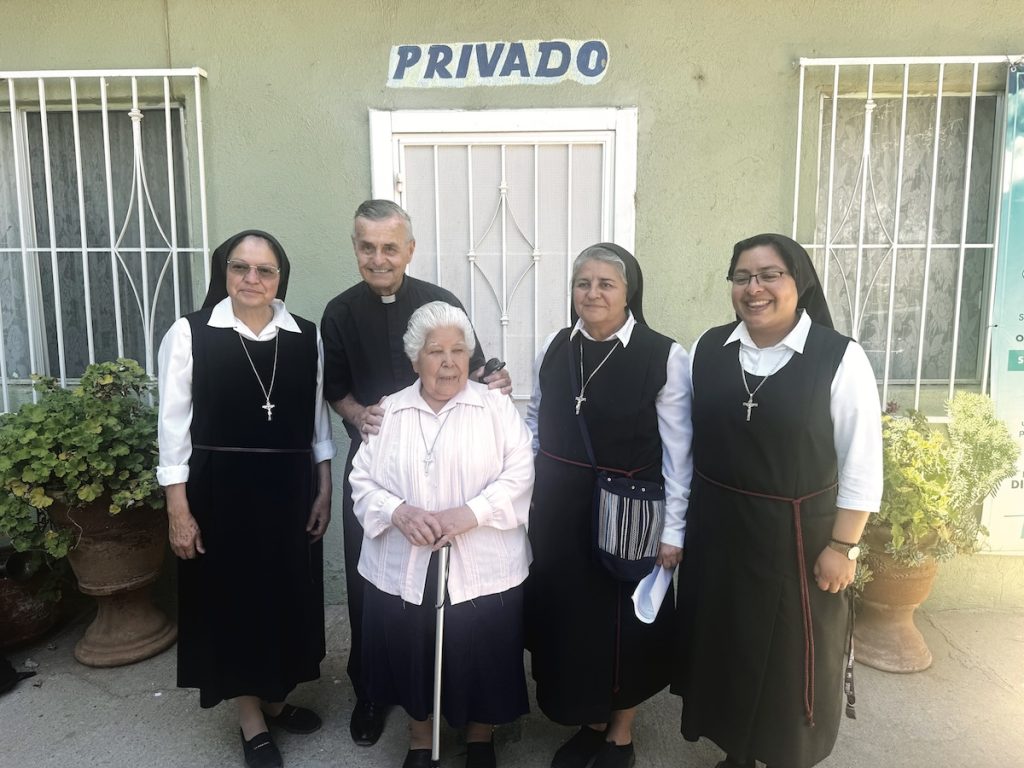
We came off the main highway onto a dirt road with more potholes than you could count. When we pulled up to Nazareth Orphanage, I could tell the buildings had seen some age. A religious sister came out of one of those buildings and said she was Sister Mary Francis. When I inquired from the Mother Superior if she had help at the orphanage, she responded by saying, “We don’t have anyone that is assisting us.” I immediately thought that this is the house that we have to take care of. These sisters and orphans will appreciate whatever we do. I believed that if I gave the sister a dollar, she would spend ninety-nine cents of it on those orphans. I can just tell that she was not going to take anything for herself. I told the mother superior that I would be back in two months with sailors and Marines to begin the project of restoration there at Nazareth Orphanage. For 30 years now, I have been leading military and civilian volunteers, four times a year, to Rancho Nazareth to improve the health and welfare of this community.